NASA Space Apps Challenge
A global hackathon hosted by NASA and partner space agencies.
Be your inner astronaut
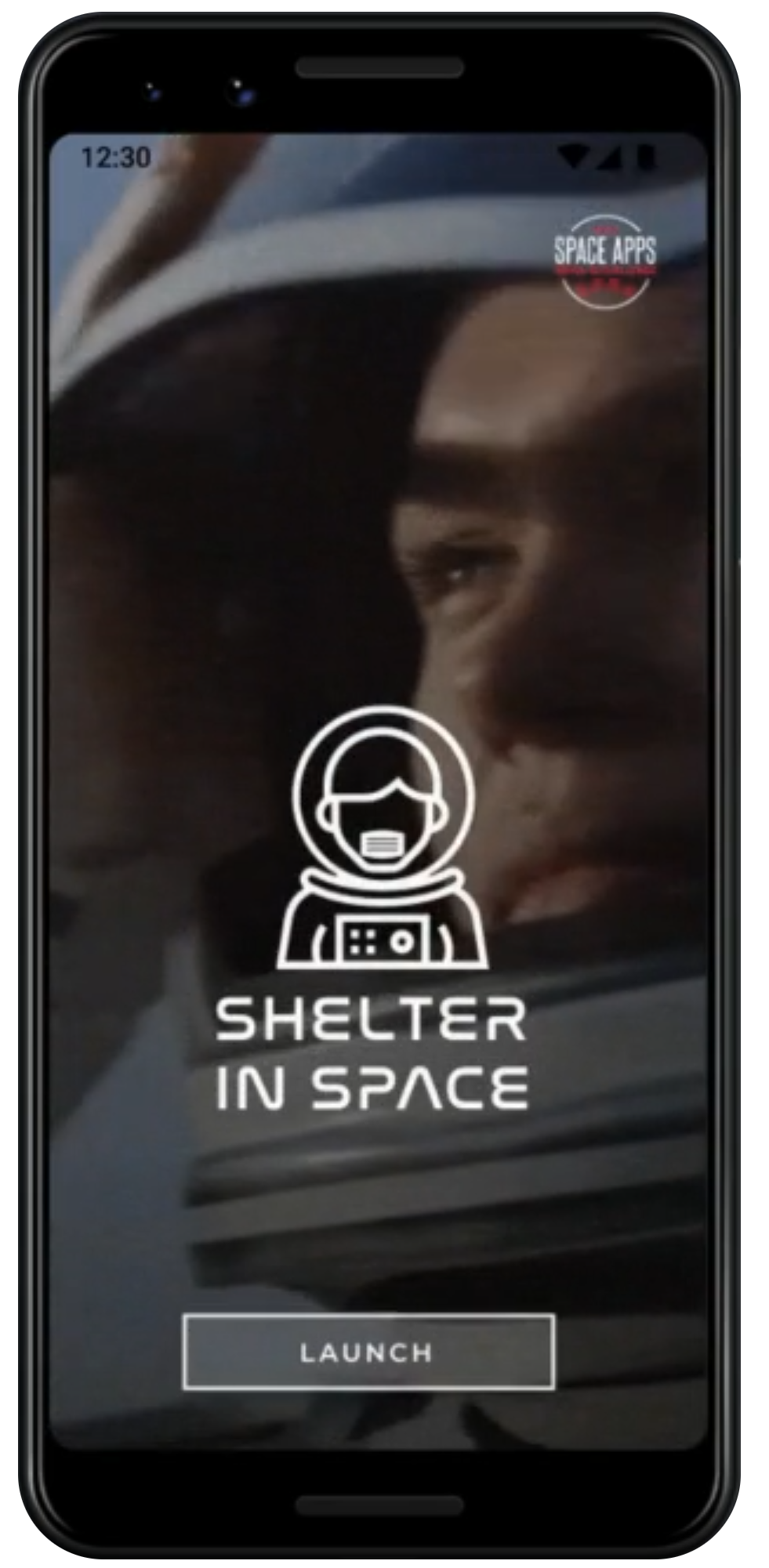
The Shelter in Space app integrates with existing wellness, self-improvement, and social connection apps to create an immersive, gamified virtual analog mission scenario while providing citizen science data for COVID19 and Human Space Flight research.
A global hackathon hosted by NASA and partner space agencies.

Shelter in Space received the global Best Mission Concept award for the solution with the most plausible solution concept and design.
Develop innovative solutions to combat social isolation due to COVID-19.
Shelter in Space transforms users into citizen-scientists embarking on an exciting virtual analog mission that will help them beat isolation and connect with a community of fellow explorers.
By applying HFBP research, the app offers tools to monitor and improve mental and physical wellness, and get support from virtual analog crewmates, astronauts, and space experts.
Users pick a virtual mission that determines commitment level and challenge activities and opt in to provide data to NASA-informed research goals.
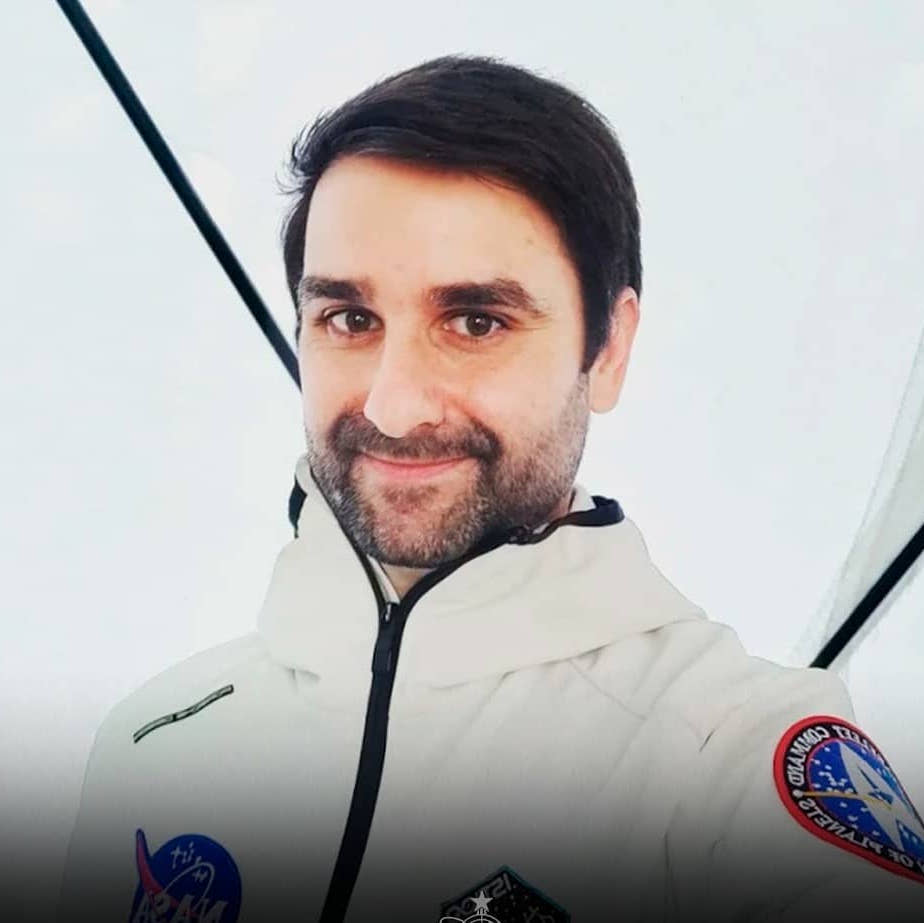 Orestis Herodotou
  Scott Coffin
 Shelter in Space is an engaging and fun smartphone-based app that integrates with existing wellness, self-improvement, and social connection apps to create an immersive, gamified space mission scenario while providing citizen science data for COVID-19 and human spaceflight research.
Due to the COVID-19 pandemic, at least 4.5 billion people were living under social distancing measures worldwide, triggering a wide variety of psychological problems such as panic disorder, anxiety, and depression.
Shelter in Space is a gamified mental and physical health countermeasure application using widely available technologies to help users fulfill a sense of belonging and purpose, and positive social interaction.
Prolonged isolation and confinement of astronauts in human space missions and citizens practicing social distancing measures are linked to adverse behavioral and physical conditions, including insomnia, anxiety disorders, and depression. Early detection and prevention of isolation-induced adverse conditions are critical to mission success.
Shelter in Space encourages users to link sleep diagnostic apps and provides adaptive countermeasures based on severity of disorder and possible disrupting factors, based on NASA countermeasure guidelines. It also focuses on meal planning and nutrition-based recommendations, using NASA nutrition analysis tools and integrations with popular online applications.
External motivation in the form of reward-based gamification encourages immediate, short-term behavioral changes. Long-term behavioral modifications can be adopted through intrinsic motivation, developed through meaningful gamification. Shelter in Space uses game design elements to encourage mastery of social isolation countermeasures so external rewards are no longer necessary for continued use.
Users have the freedom to explore and fail within boundaries through collaborative, space-themed mission-specific STEM challenges.
Space-themed mission narratives are integrated with real-world settings and unique parallels between COVID-19-related social isolation / confinement conditions and space travel.
Users design their own missions, form crews, and make decisions regarding mission objectives, resulting in rewards such as level increases, unlocking special events, and the ultimate reward: a real-life phone call to astronauts on the International Space Station.
Space-themed game design is based on real space mission data, NASA Human Research Program countermeasure protocols, and real-time local and global COVID-19 health data and guidelines.
Users discover and learn from other crew members and real astronauts through prompts, communication reminders, check-ins, virtual live special events, and chat rooms.
Users are encouraged to reflect on progress through daily mission briefings, health dashboard notifications, and diary log prompts.
NASA has long used software-based measurement of behavioral health indicators such as mood, cognitive function, fatigue, and sleep quality to mitigate effects of prolonged isolation and confinement using in-space and ground-based analog facilities.
Further research is needed to identify and validate countermeasures that promote behavioral health and performance during interplanetary missions. Large datasets with diverse cohorts and objective behavioral measures are needed to develop personalized countermeasures.
The COVID-19 pandemic created a widespread need for science and technology-based guidance while also creating an unprecedented research opportunity: enrolling global citizens in ground-based analog missions as citizen scientists.
Shelter in Space unobtrusively collects objective physiological, neurological, and behavioral health metrics in combination with a machine learning A/B platform to customize countermeasures that reduce risks from adverse cognitive and behavioral effects induced by social isolation and confinement.
The scale and impact of COVID-19 created unprecedented challenges for billions of people. Human space travel and exploration represents the pinnacle of human creativity and the ability to solve complex problems through unbounded collaboration and curiosity. Shelter in Space aimed to share that optimism and ingenuity widely, helping people explore their inner astronaut while re-envisioning a more resilient and sustainable relationship to Spaceship Earth.
Future plans included expanding content campaigns, integrations, machine-learning-powered AI to help users identify trends in their data, new missions, educational modules, space-based data sources, mini-games, and partnerships that bring the experience outside the app.
One team member was doing a personal analog mission while the project was created, living like an astronaut in complete isolation for 30 days under shelter-in-place rules from inside a geodesic dome built with up-cycled sail material.
The team used NASA’s Human Research Roadmap to identify hazards, countermeasures, and knowledge gaps related to social isolation and physical confinement in analog and space missions. Google Scholar helped characterize psychological risks associated with COVID-19 isolation and confinement.
The project evaluated existing tools for video chat, social networking, health monitoring, wellness, and learning, then integrated validated apps into a unified space-themed experience that encouraged social collaboration, mental and physical health, and crowd-sourced data for space agencies.
The prototype used Framer, Figma, JavaScript, JSON, REST HTTP APIs, and NASA Open APIs, with real space data such as Mars InSight weather, daily astronomy photos, and satellite imagery used to trigger prompts, challenges, and imagination.
The team also experienced emotional, psychological, and physical distress from nearby violent protests related to race-based societal injustices while working through the project.
Social distancing policies enacted the world over during the COVID-19 pandemic have left many people socially isolated. Your challenge is to develop innovative solutions to combat social isolation.
In an effort to stop the spread of COVID-19, many people around the world have engaged in prolonged social isolation over the past several months. With social isolation defined as the absence of, or reduction in social contact with others, long-duration spaceflight may offer a relevant parallel to the multidimensional nature of reduced or absent social contact, and the psychological underpinnings for the associated risk factors.
NASA astronauts are trained to live and work in the isolation of space, and other types of NASA professionals have experience enduring social isolation as well. Oceanographers and cryospheric researchers can spend months on ships or at remote locations conducting research. Terrestrial scientists can also spend weeks or months isolated in the study of local biology, ecosystems, or field work.
For some professionals, social distancing is a normal practice, but for countless people, the experience of isolation is a new and perhaps challenging experience.
Even before COVID-19, it was recognized that prolonged social isolation can adversely impact our health and well-being. This is particularly true for the aging members of our society. And now, social distancing policies enacted around the globe during the COVID-19 pandemic have produced socially isolated circumstances for countless individuals. This isolation and confinement can also increase the risk of depression, self-harm, self-neglecting behavior, and decline in cognitive functioning.
Technological breakthroughs in the field of social isolation could allow researchers and implementors of these innovations to better understand, characterize and reduce the risks associated with social isolation, as well as leverage these insights to reduce the risk associated with social isolation on long-duration spaceflight and for other remote research locations.
Quarantine-related policies have led to many types of new social adaptations and activities as well. In some cases, social distancing may have had the opposite effect of bringing families, groups, and individuals closer together socially, whether because of stay-at-home policies or technological adaptations such as video conferencing and teleworking.
Your challenge is to develop innovative solutions to combat social isolation. What ideas and innovative technological approaches to reduce social isolation and increase the sense of social connection among members of our society can you design? How can you turn some of the realities of quarantine into a positive experience for yourself and others?